Published . A 5 minute read.
DJI Mic 3 vs Rode Wireless GO 3: 2026 Honest Verdict
DJI Mic 3 vs Rode Wireless GO 3: which wireless mic fits your camera, phone and budget in 2026? Clear winners by use case. See our picks.
Short answer
The DJI Mic 3 is the better pick for most creators. At $259 it includes two mics, a charging case, timecode and 32-bit float backup recording, and the mics are smaller. Choose the Rode Wireless GO Gen 3 ($199) instead if you use lavalier mics, because the DJI Mic 3 has no 3.5mm lav input.
Affiliate links inside. We may earn a commission; it never changes a pick. Details.
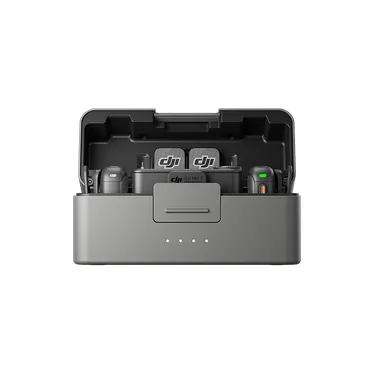
DJI Mic 3$259 (2 TX + 1 RX + charging case); $169 for the 1 TX + 1 RX kit
It's the smallest, most complete kit: the charging case and timecode come in the box, and it records a backup of every take, all for about the price of the GO Gen 3 plus its optional case.
The catch: No 3.5mm lav input, and reviewers criticize the companion app
| Pick | Price | Score | Best for | Buy |
|---|---|---|---|---|
| DJI Mic 3Best overall | $259 (2 TX + 1 RX + charging case); $169 for the 1 TX + 1 RX kit | 4.5 | Vloggers, phone and camera creators, and two-person or multi-camera shoots | See price |
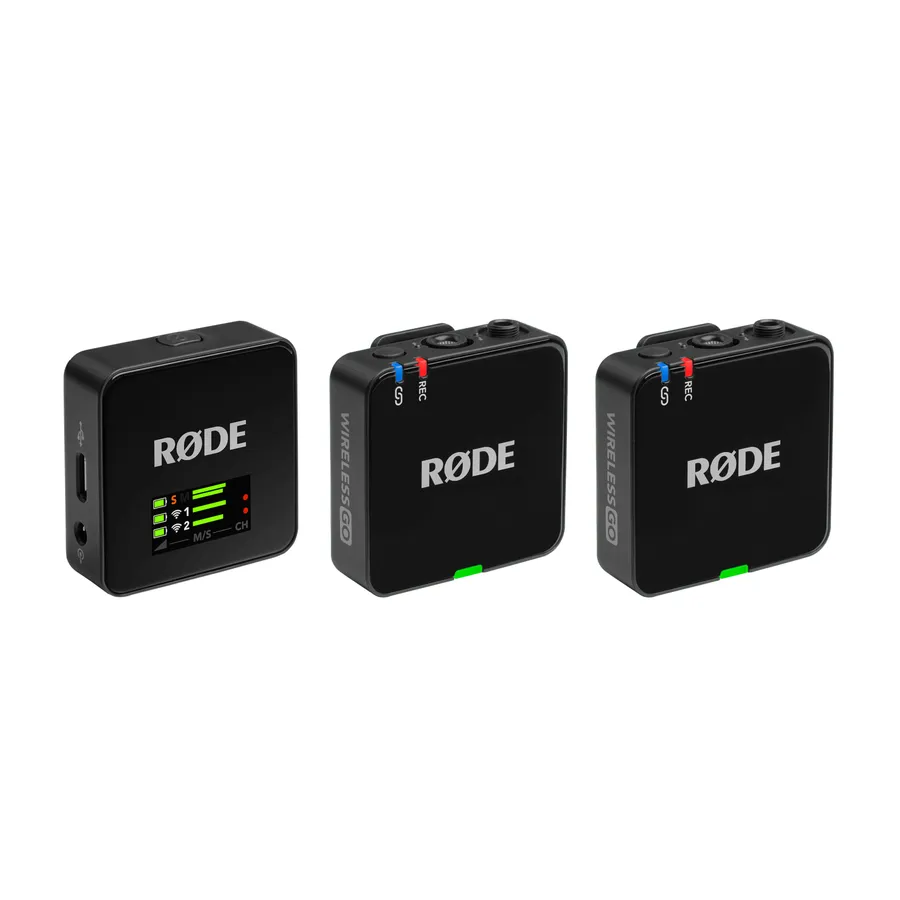 Rode Wireless GO (Gen 3)Best value Rode Wireless GO (Gen 3)Best value | $199 | 4.0 | Budget shooters who use clip-on lavalier mics | See price |
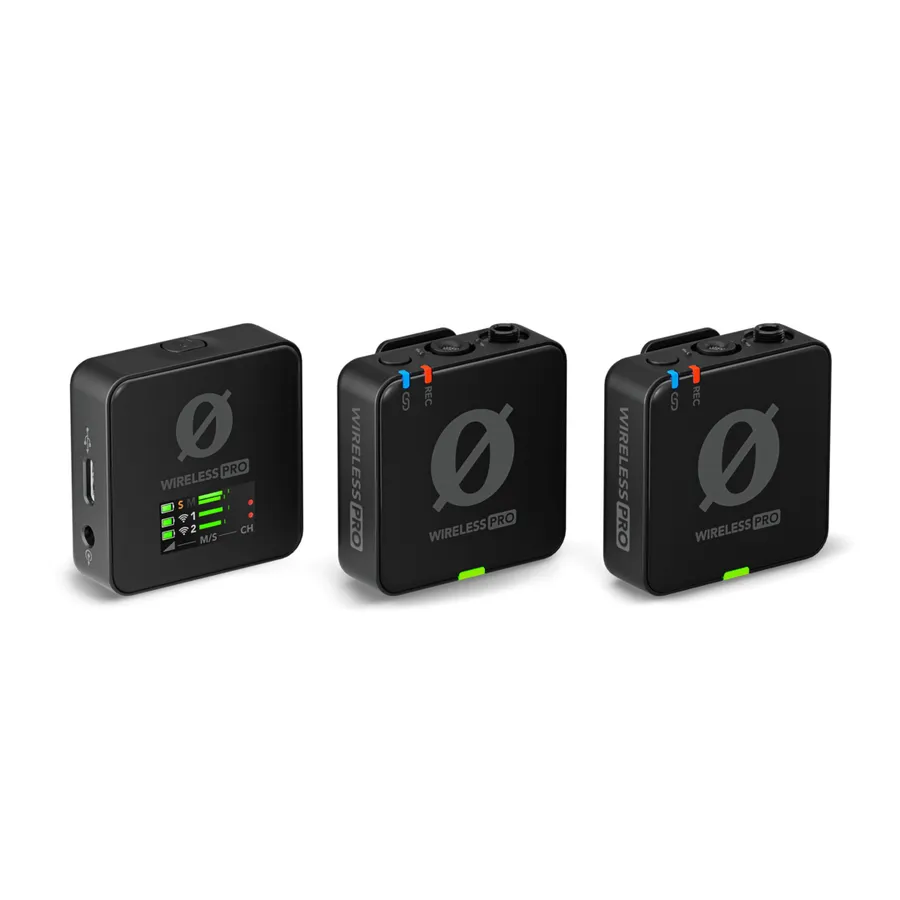 Rode Wireless ProBest for lav mics Rode Wireless ProBest for lav mics | $299 list (recently $260) | 4.5 | Interview, documentary and wedding shooters | See price |
 Hollyland Lark M2SBest for phones on a budget Hollyland Lark M2SBest for phones on a budget | From $89 (USB-C version); combos run about $119–159 | 3.5 | Creators who mostly film on their phone | See price |
You’ve narrowed it down to two clip-on wireless mics, and now you’re flipping between tabs. This DJI Mic 3 vs Rode Wireless GO 3 breakdown gives you a clear winner for each kind of shoot, using current US prices instead of the launch prices still floating around. It all comes down to one question: do you ever plug in a lav mic?
How we chose
We didn’t test these mics ourselves. We read the major reviews (SoundGuys, Digital Camera World and others), checked spec sheets, and compared the prices US retailers like DJI’s store, B&H and Sweetwater were showing in October 2026. We scored each kit on five things:
- Audio safety nets: 32-bit float and onboard backup recording, so a bad gain setting doesn’t ruin a take
- Connections: camera, phone and lavalier input
- Size and carry: how big the mics are, and whether a charging case comes in the box
- Pro extras: timecode and multi-mic setups
- Real price: what the full kit costs once you add the accessories you’ll actually want
DJI Mic 3 vs Rode Wireless GO 3: what’s actually different?
Both kits record 32-bit float audio to 32GB of onboard storage, so you get a backup copy that’s very hard to clip. After that, they go different ways.
The DJI Mic 3 puts more in the box. Its US list price is $259 for two transmitters, a receiver and a charging case. You also get timecode, and it can record a processed and an unprocessed track at the same time. Range is rated at up to 400 meters, and the case brings total use to about 28 hours.
The Rode Wireless GO (Gen 3) costs less up front at $199 since Rode’s price cut, and it keeps a 3.5mm input so you can plug in a clip-on lav. You don’t get timecode, though, and there’s no charging case unless you buy one. Add the case and you’re paying more than the price of the DJI kit.
Which one wins for your use case?
- Vlogging, talking-head and phone videos: DJI Mic 3. The mics are smaller and the case comes in the box, so it’s easier to grab and go.
- Lav mics hidden under clothing (interviews, weddings, short films): Rode GO Gen 3. The DJI Mic 3 has no lav input at all.
- Multi-camera shoots that need syncing: DJI Mic 3, because it has timecode and the GO doesn’t.
- Tightest budget that still has 32-bit float backup: Rode GO Gen 3 at $199.
The picks, one by one
DJI Mic 3: best overall
For most creators, this is the one to get. It’s small, it records two versions of every take, and the charging case covers a full shoot day. Reviewers keep calling it the best kit for most creators right now. The downsides: there’s no lav input, and SoundGuys gave the companion app a hard time.
Rode Wireless GO (Gen 3): best value
At $199, this is the cheapest way to get 32-bit float, onboard recording and a lav input in one kit. GainAssist sets your levels automatically, and Rode rates the range at 260 meters. It loses points for the bigger transmitters and the missing charging case, which matters more once you’re shooting all day.
Rode Wireless Pro: best for lav mics
This is the step up, and it’s less of a stretch than it used to be. Rode cut its list price from $399 to $299, and B&H has recently had it at $260, about the same as the DJI Mic 3. For that you get timecode, a charging case, two lavalier mics and locking 3.5mm inputs. If you shoot documentaries or interviews, this is the one we’d pick. The catch is that it’s bulkier than the DJI on camera.
Hollyland Lark M2S: best for phones on a budget
If you film on your phone and don’t need a backup recording, the Lark M2S gets you clean wireless audio for well under $150. It has tiny transmitters, auto gain and noise cancelling. You give up 32-bit float and onboard recording, so a mistake you make during the shoot stays in the file.
Is the DJI Mic 3 still sold in the US?
Yes. It launched in the US in August 2025, and it was in stock at B&H and other US retailers when we checked in October 2026. DJI’s own global store sometimes shows it out of stock, so check a couple of retailers before you assume it’s gone.
Who should skip both?
- People who only record podcasts at a desk. A wired USB or XLR mic will sound better for less money.
- Phone-only creators on a tight budget. The Lark M2S does the job, and you probably won’t miss 32-bit float.
- Anyone already using a DJI Mic 2 or Rode Wireless Pro. The upgrade is small. Put the money toward lighting instead.
Bottom line
Get the DJI Mic 3 if you want the smallest, most complete kit for vlogging, phone videos and multi-camera shoots. Get the Rode Wireless GO Gen 3 if you need a lav input and want to spend as little as possible. And if lav mics are central to your work, look hard at the Rode Wireless Pro. At current street prices it costs about the same as the DJI and includes the lavs.
The picks, in detail
1. DJI Mic 3
Best overallYou get two tiny mics, a charging case and timecode, and every take is backed up as 32-bit float audio. It's a complete kit you can grab and go without buying anything extra.
- Best for
- Vloggers, phone and camera creators, and two-person or multi-camera shoots
- The catch
- No 3.5mm lav input, and reviewers criticize the companion app
2. Rode Wireless GO (Gen 3)
Best valueThis is the cheapest kit here that has 32-bit float, onboard recording and a lav input. GainAssist handles your levels so you can focus on the shot.
- Best for
- Budget shooters who use clip-on lavalier mics
- The catch
- No timecode, bigger transmitters, and the charging case costs extra
3. Rode Wireless Pro
Best for lav micsTimecode, a charging case, two lavalier mics and locking 3.5mm inputs all come in the box. Since Rode's price cut, it costs about the same as the DJI Mic 3.
- Best for
- Interview, documentary and wedding shooters
- The catch
- Bulkier on camera than the DJI Mic 3
4. Hollyland Lark M2S
Best for phones on a budgetThe two transmitters are tiny, and auto gain plus noise cancelling make phone audio sound clean right away. It's the cheapest way to stop relying on your phone's built-in mic.
- Best for
- Creators who mostly film on their phone
- The catch
- No 32-bit float or onboard backup recording
Questions people ask
Does the DJI Mic 3 have a lavalier input?
No. The DJI Mic 3 has no 3.5mm input, so you can't plug in an external lav mic. You can only use the clip-on transmitters with their built-in mics. If you need hidden lavs for interviews or film work, choose the Rode Wireless GO Gen 3 or the Rode Wireless Pro. The Pro comes with two lavalier mics and has locking inputs.
Is the DJI Mic 3 worth it?
Yes, for most creators. At $259 you get two mics, a charging case, timecode, 32GB of onboard storage and 32-bit float backup recording, which is more in the box than the GO Gen 3 offers. The main reason to skip it is if you rely on lavalier mics, since it has no lav input.
DJI Mic 3 vs Rode Wireless Pro: which is better?
It depends on whether you use lavs. The DJI Mic 3 is smaller and better for vlogging and phone videos. The Rode Wireless Pro is better for interviews and documentaries because it includes two lavalier mics and locking 3.5mm inputs. Both have timecode and a charging case. At recent street prices of around $260, they cost about the same.
Which is better for iPhone, the DJI Mic 3 or the Rode GO Gen 3?
For most iPhone users, the DJI Mic 3. Its kit includes a USB-C phone adapter, and the smaller transmitters look better on camera. USB-C iPhones (iPhone 15 and newer) work with both receivers. With older Lightning iPhones, check that you have the right adapter or cable before buying either kit.
Is the DJI Mic 3 still available in the US?
Yes. The DJI Mic 3 went on sale in the US in August 2025, and B&H and other US retailers had it in stock in October 2026. DJI's own online store sometimes shows it out of stock, so it's worth checking a few retailers. Prices have stayed around $259 for the 2-mic kit with a case.
P.S. You read the whole thing, which means you care. DJI Mic 3 is the one, or Rode Wireless GO (Gen 3) if you're watching the budget.
Get the next verdict on Telegram